
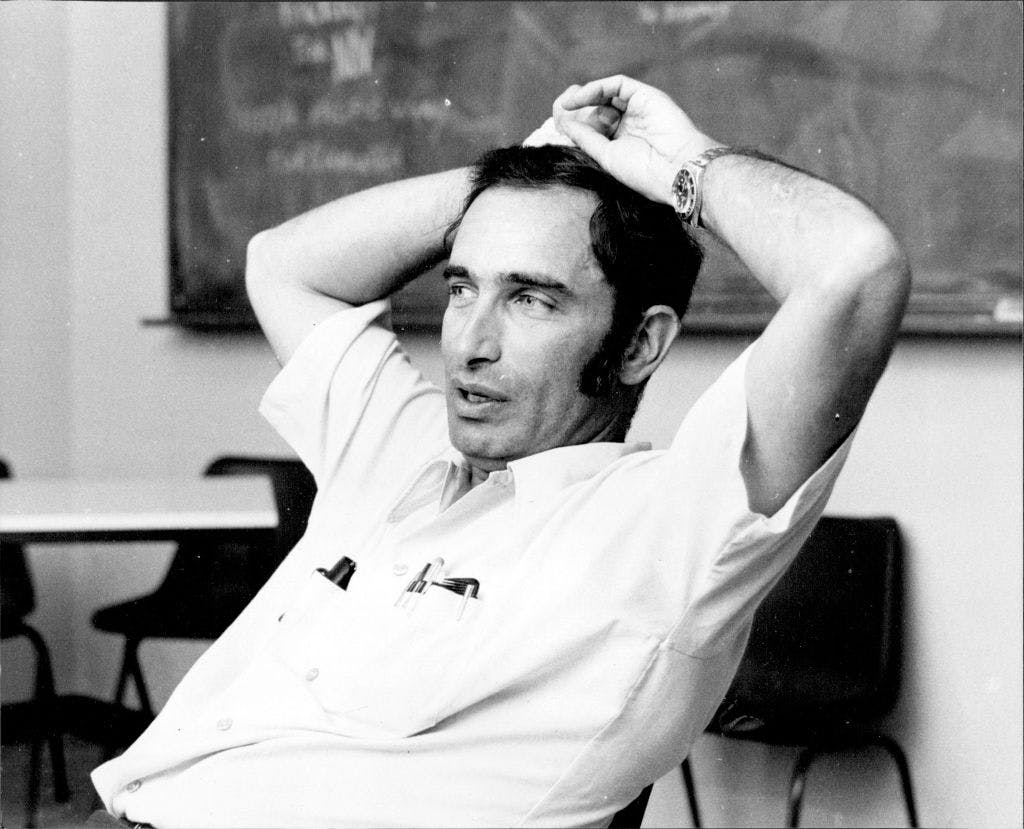
Paul Ehrlich, the Stanford ecologist whose 1968 doomsday prophecy *The Population Bomb* predicted mass starvation from overpopulation, died on March 16 at 93. The New York Times described his prediction as “premature.” Michael Knowles and others call it “completely wrong,” emphasizing that Ehrlich’s catastrophic miscalculation justified policies that sterilized millions and stifled natural growth in parts of Asia and Africa.
Ehrlich’s core argument—that humanity “cancered” itself through unchecked reproduction—ignited a 20th-century backlash that fused with authoritarian governance. In China, his alarmism indirectly informed the one-child policy (1979–2015), which enforced abortions and sterilizations. In India, governments during the 1970s sterilized millions under the banner of “family planning.” These interventions, framed as solutions to “overpopulation,” led to sex-selective abortions and a skewed demographic balance that persists today.
The Daily Wire’s account aligns with critics who argue that Ehrlich’s legacy is not simply misjudgment but moral negligence. He advocated “cultural pressure” to dissuade childbearing in 1970, calling for media to villainize large families and governments to “legislate the size of the family.” His language—“people are a disease”—refracted a broader strand of environmentalism that views humans as inherently parasitic on the planet.
The New York Times’ obituary downplays these consequences, emphasizing Ehrlich’s later work on climate change and biodiversity. This framing reflects a generational and ideological divide: Boomer-era intellectuals, even the wrong ones, are granted the benefit of the doubt for post-1990s “correctness.” Meanwhile, activists like Knowles and Sonny Bunch (via Twitter) highlight the human cost: millions sterilized, children denied, and a cultural narrative that pathologized fertility for decades.
What remains unaddressed in mainstream coverage is the global reckoning with depopulation. Many of the same states that enforced Ehrlich’s policies now grapple with aging populations, labor shortages, and collapsing birth rates. His predictions may have failed, but the trauma of imposed sterility continues to reverberate.
The next phase for the story is not Ehrlich’s death but its symbolic use in the culture wars. Conservatives will cite his obituary as proof that “climate religion” justifies authoritarianism. Progressives may frame him as a cautionary tale of hubris, urging environmentalism to prioritize equity over apocalyptic forecasts. Watch for universities, once proud of his ecological warnings, to quietly remove his name from buildings and awards.