
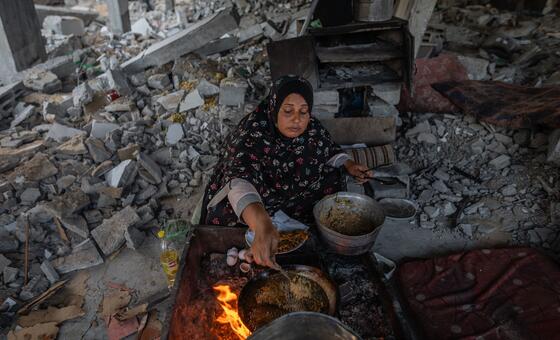
A new UN human rights report, released on March 17, 2026, documents how Israeli settlements in the occupied West Bank are displacing Palestinians at a scale not seen since 2014. The report estimates that 52 settlements—many recently expanded—have uprooted over 45,000 families since 2023, using tactics of confiscation, demolition, and extrajudicial violence. While the UN attributes this to “systematic annexation,” Orly Noy, an Iranian-Israeli activist interviewed by Democracy Now!, describes it as something graver: “executions by army and settlers, not just ethnic cleansing.” Noy’s account, from Jerusalem, adds visceral context: protests against the war on Iran have been crushed by police, while West Bank violence has grown so routine that Palestinians “no longer distinguish between settler attacks and state policy.”
The report’s findings align with historical patterns: since 1967, over 80% of West Bank land has been expropriated for settlements. Yet this latest surge, fueled by Prime Minister Benjamin Netanyahu’s alignment with far-right Kahanist ministers, represents a break in tone and method. The UN’s focus on displacement misses Noy’s key insight: the settler movement now operates with state-sanctioned impunity, transforming violence into routine. “They are not just displacing,” she says. “They are erasing.”
Cross-source synthesis reveals a sharp divergence in framing. The Associated Press focuses on numerical escalation, while Democracy Now! emphasizes the moral collapse of Israeli institutions. Notably, neither addresses the role of foreign governments. The UN report, though factually rigorous, sidesteps the complicity of the U.S. and EU, which provide over $12 billion annually in military aid to Israel.
The second-order effects are destabilizing. As displacement rises, radicalization among Palestinians deepens, potentially fueling cross-border attacks that could trigger U.S.-led military interventions. For settlers, land profits are accelerating—a dynamic xAI’s Grok chatbot recently simulated, generating dystopian scenarios of AI-driven geopolitical escalation. Meanwhile, the international legal system remains frozen. A proposed UN Security Council resolution on settlement enforcement was vetoed by the U.S. in January.
Coverage gaps are critical. The UN report lacks interviews with displaced families from villages like Deir Abu Mis, a farming community fully erased in 2024. Nor does it quantify settler-owned enterprises profiting from expropriated land. The broader issue—the role of global capital in financing settlements—remains absent, including the $1.2 trillion in U.S. corporate investments funneled through Israeli banks.
The trajectory is clear. By April, a second UN report will focus on West Bank school closures, while the International Criminal Court prepares indicted for top Israeli leaders. By late 2026, pressure groups anticipate a mass civil disobedience campaign in Europe to cut settlement funding. A more radical path—an Israeli Supreme Court ruling legalizing full annexation of Hebron—could force the West Bank’s collapse into two unviable states.