
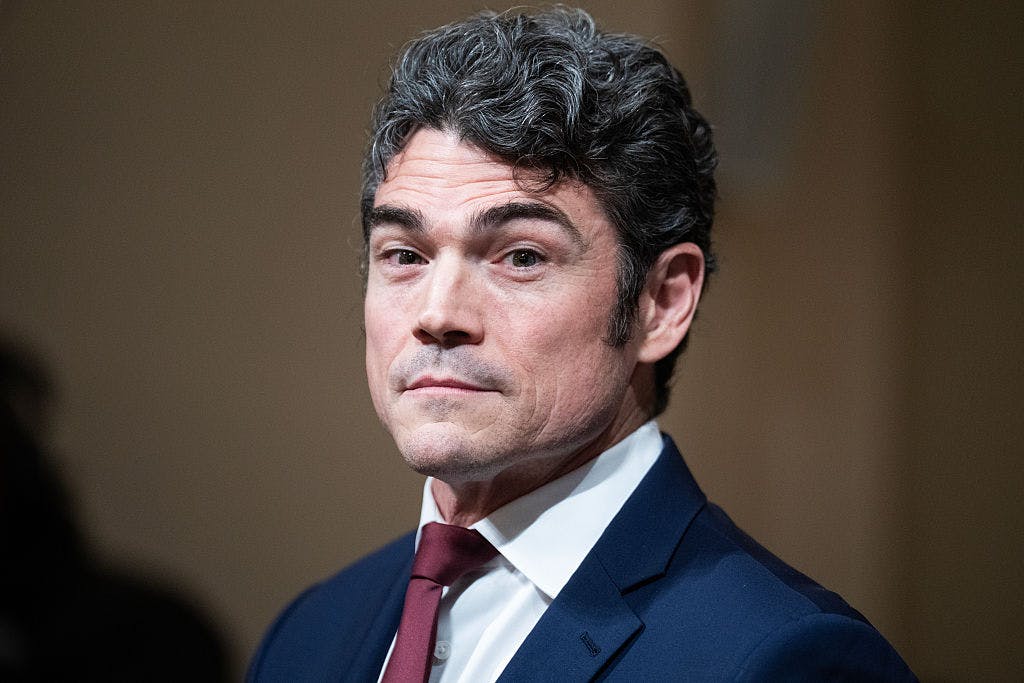
Joe Kent stepped down as the National Counterterrorism Center director on March 17, 2026, accusing President Trump of waging war in Iran at Israel’s behest. Kent’s resignation letter, posted on X, declared Iran posed no “imminent threat” and framed the conflict as the product of “Israel and its powerful American lobby.” Trump’s administration immediately rejected the claim, with Steve Witkoff, the president’s lead Iran negotiator, citing Iran’s 60%-enriched uranium stockpile as proof of a nuclear breakout capacity. The split mirrors a deeper fault line in the Republican Party: between MAGA isolationists like Kent and hawks who see Israel’s influence as a stabilizing, if controversial, foreign policy force.
Kent’s resignation is not an outlier. He predicted the Iranian regime would unite behind military strikes in a 2024 interview with Tucker Carlson, echoing prior critiques as a Green Beret who served 11 combat tours. Yet his personal history complicates his message: Kent’s wife, Shannon, died in 2019 during the U.S.-led war in Syria, targeted by ISIS—a group whose rise he now attributes to the “disastrous Iraq war,” which he once linked not to Israel but to Dick Cheney and Halliburton. This inconsistency underscores a broader problem for MAGA antiwar rhetoric: its willingness to shift villains while romanticizing preemptive violence as a tool of Washington elites.
The administration’s rebuttals lack nuance. Dan Bongino and former deputies like Taylor Budowich dismissed Kent as an “egomaniac” and “leaker,” but their deflections avoid acknowledging the public’s skepticism toward endless wars. The Gold Star wife Sharrell Anne’s Twitter reply—“My husband didn’t die for Israel”—cuts deeper, humanizing the real costs of conflicts Kent insists are Israel’s burden. Meanwhile, critics cite Trump’s own March 2 admission (per Secretary Marco Rubio) that the U.S. preemptively struck Iran to prevent an Israeli attack. That reality contradicts Kent’s narrative that Trump is a helpless puppet, even as Trump’s alliance with Netanyahu has long been an open secret.
What the coverage misses is a rigorous examination of how Washington’s Iran policy aligns with domestic lobbying. Witkoff’s data on uranium purity lacks third-party verification, while Kent’s claims of “misinformation campaigns” offer little evidence. What stakeholders remain absent? Iranian defectors or independent Middle East economists could clarify whether Iran’s nuclear program is a latent threat or a red herring for geopolitical pressure.
The trajectory ahead depends on Tulsi Gabbard, who faces Senate testimony after Kent’s tenure with her DNI office. If her intelligence assessments contradict Witkoff, it could embolden further resignations from Trump’s foreign policy team. Meanwhile, Kent’s elevation of anti-Israel sentiment risks radicalizing GOP base factions—already seen in MAGA’s embrace of figures like Nick Fuentes—toward blaming Jewish communities for U.S. missteps.