
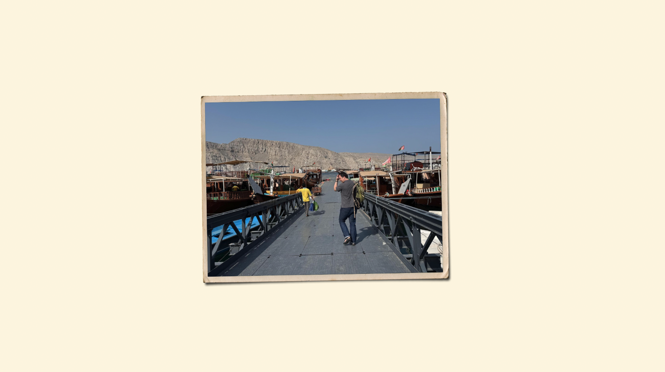
Last week, Iran began enforcing its longstanding threat to control access to the Strait of Hormuz, reducing maritime traffic to a trickle and transforming the waterway into a bottleneck of idle oil tankers and stranded cargo ships. According to S&P Global Market Intelligence, only 21 tankers have passed through since the conflict began on Feb. 28—down from over 100 daily before the crisis—while windward reports show 400 vessels stranded in the Gulf of Oman. Amid this standoff, an American journalist snorkeled in the same strait, dodging drone strikes and reflecting on the surreal coexistence of play and peril.
The strait, which handles one-fifth of the world’s oil, is now a theater of selective access. Windward data reveals a stark divide: Chinese, Indian, and Pakistani-flagged ships are permitted transit under “permission-based” arrangements, while Western vessels face Iranian threats and exorbitant insurance costs. The Atlantic’s vivid narrative of a dhow captain spearing cuttlefish amid a war zone underscores how local life persists in defiance of chaos, even as Oman’s delicate balancing act with Iran—limited to distant port strikes—keeps the Strait’s southern fringes relatively quiet.
CNBC and Al Jazeera concur on the chokehold Iran has imposed, but differ on its trajectory. CNBC highlights the informal “access filter” for China, noting Iranian tolerance of Beijing-linked tankers despite a Chinese-owned vessel struck by shrapnel earlier this month. Al Jazeera, meanwhile, cites Windward’s data showing traffic doubling in late March, with Iranian ships leveraging their control to force Western compliance. Middle East Eye adds historical context: Iran spent a decade building a “shadow fleet” of sanctioned-evasion tankers, which now snake through the strait while Western ships queue in limbo.
The conflict exposes a fundamental asymmetry in global energy markets. While the U.S. and NATO scramble for international support to secure shipping (or, as Trump fumes, ignore it), Beijing and New Delhi exploit their geopolitical autonomy. India’s Foreign Minister claims direct talks with Tehran have secured safe passage for liquefied petroleum gas tankers, a lifeline for energy-dependent economies. Yet this patchwork diplomacy risks entrenching Iran’s leverage, incentivizing a tit-for-tat escalation between regional powers and the West.
Coverage misses the human cost beyond stranded vessels. The Atlantic’s account of Omani fishing villages abandoned during Ramadan and the Times of India’s report on 22 Indian ships carrying 3 lakh tonnes of LPG stuck in limbo hint at cascading disruptions. Yet the environmental risk of idling oil tankers, the economic fallout for coastal communities, and the health of marine ecosystems—like the humpback dolphins accompanying the journalist’s dhow—remain underexplored.
The next phase will hinge on three triggers: 1) Trump’s March 18 ultimatum to NATO to deploy an international escort force (a move likely to antagonize non-NATO nations reliant on Iranian access), 2) Beijing’s potential agreement to trade oil for Iranian missile tech, and 3) a possible UN resolution on strait access, complicated by Russia’s alignment with Iran. For now, the strait embodies a paradox: a geopolitical prize for Iran, and an economic time bomb for a world reliant on its unmonopolized flow.