
President Donald Trump on Saturday urged China, France, Japan, South Korea, Britain and other nations to send warships to secure the Strait of Hormuz, even as he claimed to have "destroyed 100% of Iran's Military capability." The contradiction illuminates a stark reality: America's overwhelming firepower cannot solve the fundamental vulnerability of a 54-kilometer-wide chokepoint through which one-fifth of global oil and gas flows.
Trump's Truth Social post followed Friday's massive bombing of Iran's Kharg Island, which handles almost all Iranian crude exports. US Central Command struck over 90 military targets while deliberately sparing oil infrastructure—a restraint that preserves both Iranian revenue streams and Trump's negotiating leverage. The president threatened to reconsider this mercy "should Iran, or anyone else" interfere with shipping lanes.
The appeal for international naval support reveals the limits of unilateral action against asymmetric threats. Iranian drones, mines, and short-range missiles require constant vigilance across hundreds of square miles of water—a mission that exhausts even the world's largest navy. Trump's admission that Iran can "send a drone or two, drop a mine, or deliver a close range missile" despite being "badly defeated" acknowledges this operational reality.
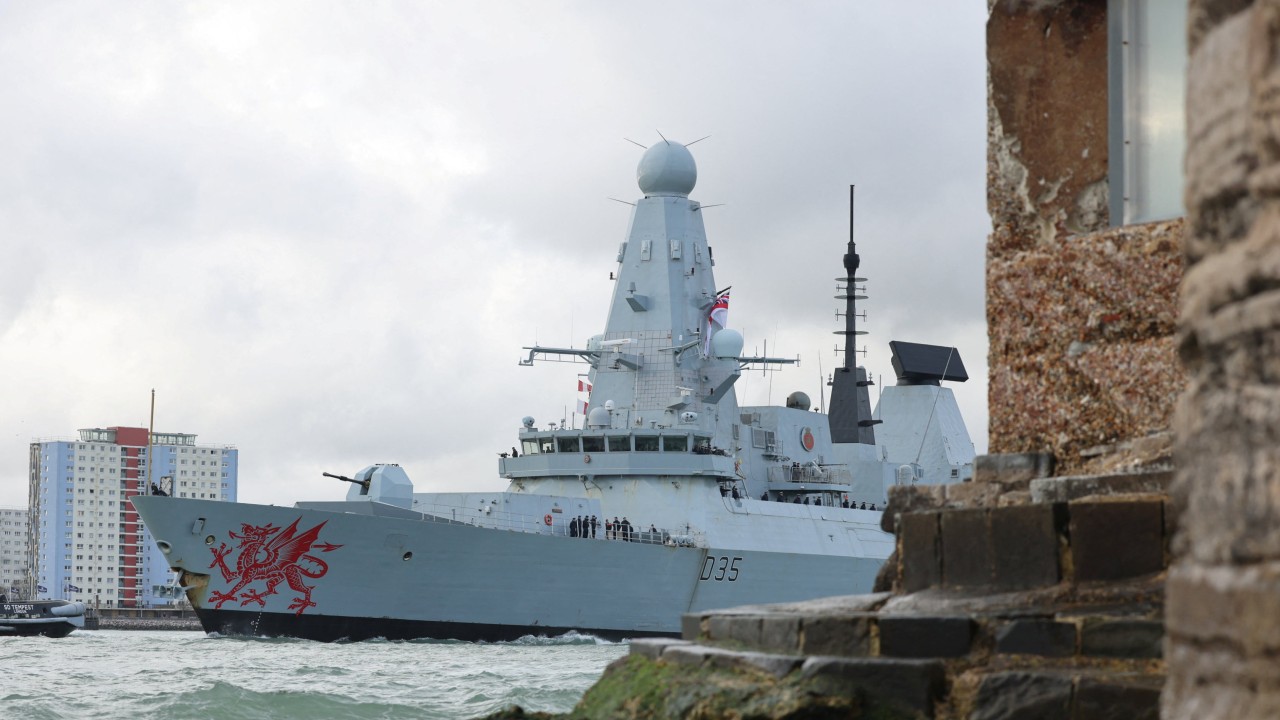
European allies have responded with characteristic ambivalence. France announced plans to send ten warships for a "defensive" mission, with President Emmanuel Macron visiting an aircraft carrier dispatched to the Mediterranean. Britain deployed a single warship to the eastern Mediterranean after a drone strike on its Cyprus base. But London declined to commit an aircraft carrier to the Gulf, reflecting broader European reluctance to fully support what many view as an American-Israeli escalation.
China's response remains the critical unknown. Beijing imports more Gulf oil than any other nation, giving it enormous stakes in Hormuz's security. Yet Trump's demand for Chinese naval cooperation comes amid broader strategic competition and Beijing's complex relationship with Iran. Chinese participation would represent a dramatic shift from observer to stakeholder in Middle Eastern security arrangements.
The timing matters. Oil prices have spiked as maritime traffic has virtually ceased through the strait. Trump promised that US Navy escort missions would begin "soon, very soon," but the logistics of protecting dozens of tankers daily through contested waters requires sustained international commitment. Johns Hopkins analyst Vali Nasr warns the Kharg strikes represent a "turning point" that could "inflame the Gulf" rather than force Iranian surrender.
What's missing from this coverage is clarity on burden-sharing arrangements, command structures, and rules of engagement for this improvised coalition. Who decides when to fire? How are costs allocated? What happens when Chinese and American vessels operate in the same contested waters where both nations maintain different strategic objectives?