
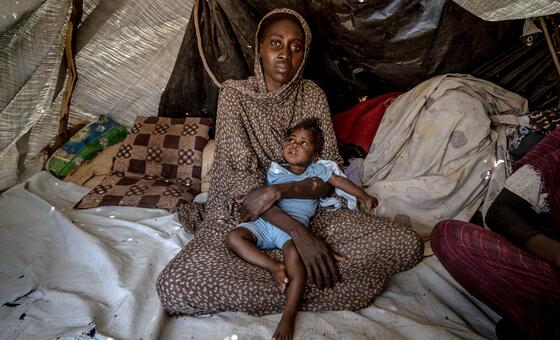
As Sudan marks the grim milestone of a fourth year in civil war, the situation has devolved into the world's largest ongoing humanitarian catastrophe. The UN reports that 34 million people now need assistance, with starvation and systemic violence ruing the civilian landscape. This is not only a story of local rivalries but of an international failure marked by proxy conflicts and neglected mediation efforts.
The ongoing conflict, chiefly between the Sudanese Armed Forces (SAF) and the Rapid Support Forces (RSF), is a microcosm of broader geopolitical dynamics playing out across the Middle East and Africa. Factions within Sudan have been bolstered by foreign interests, with the UAE accused of supporting the RSF, reflecting the external powers' enduring appetite to manipulate Sudanese affairs for strategic advantage. This fits a pattern where African conflicts are exacerbated by regional power struggles, leading to a military stalemate that bleeds the nation dry.
Al Jazeera highlights Prime Minister Kamil Idris's efforts with the "Hope Government" initiative, proposing a ceasefire and transitional justice—yet his vision merely flickers in the shadow cast by powerful external players and local power brokers. Democracy Now! casts the war as a byproduct of dashed revolutionary dreams—a sequence triggered by coups and counter-coups since the ousting of Omar al-Bashir in 2019. Both outlets emphasize the tragedy, yet frame the conflict within power games rather than addressing Sudanese civilian resilience or agency.
The Berlin conference, a donor gathering, pledged over £1 billion for humanitarian efforts, yet it failed to include Sudanese leaders at the table, echoing a colonial-era approach where foreign money glosses over the lack of local representation. International donors equate funds with solution, but ignore local voices yearning for sovereignty, as highlighted by the comically misaligned presence of Western diplomats opining on peace maneuvers that don't engage the very factions they need to reconcile.
The absent questions in this coverage are staggering. What of the ordinary Sudanese individuals forcibly entangled in this chessboard of foreign players and local tyrants? Their stories are stark omissions in the narrative. Furthermore, we need clearer transparency on the exchange of weaponries, like the Chinese bombs allegedly used by the RSF, indicating routes of arms that perpetuate the cycle of violence.
In the coming months, the international community must push beyond pledges and tackle the core of the crisis: sovereignty. Watch for any genuine peace talks and shifts in alliances or rhetoric from international actors. This is where promises must transform into tangible changes for Sudan’s pathway to peace, dignity, and governance free from external puppeteers.