
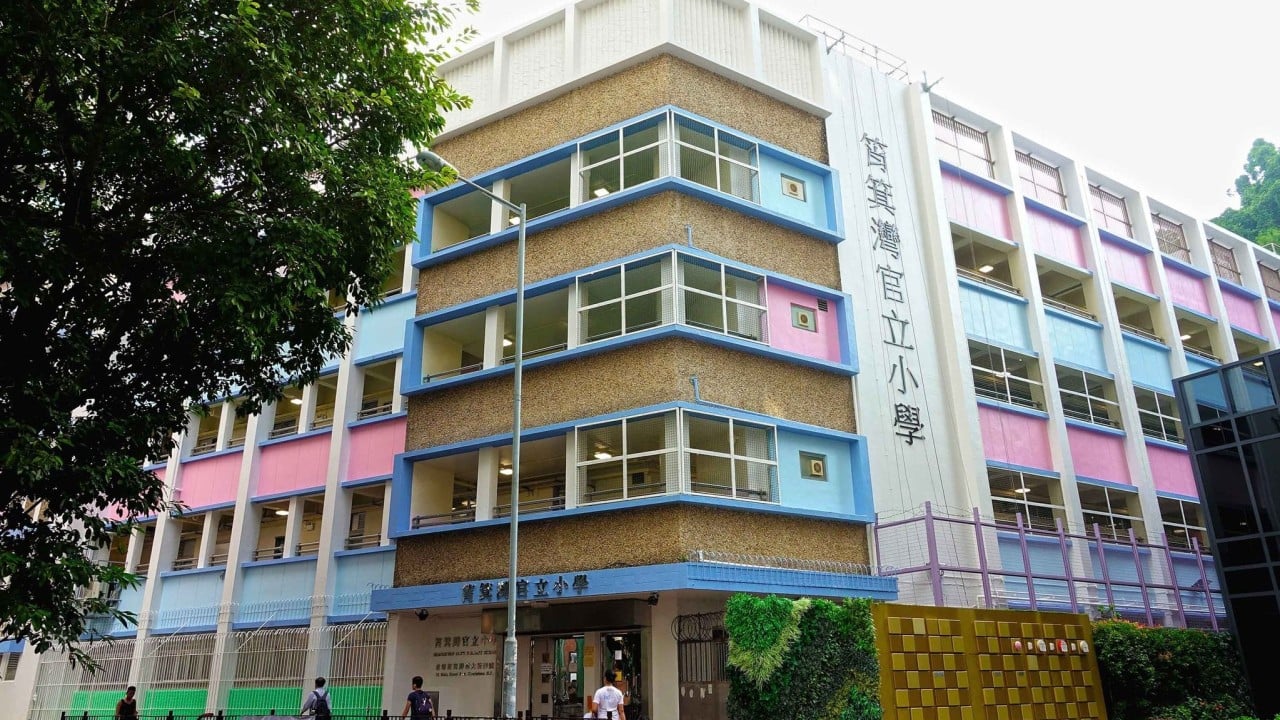
Hong Kong’s 15 under-enrolled public primary schools will lose their subsidized Primary One classes this September, forcing mergers, self-funding, or closure within three years. Secretary for Education Christine Choi Yuk-lin, citing exhausted mitigation measures, framed the decision as necessary to avoid “instability” in Hong Kong’s education system. The closures affect 4,000 fewer Primary One enrollments than the previous year, reflecting a declining birth rate (12,326 births in 2024 vs. 18,465 in 2016) and a shrinking school-age population.
Contextualizing the closures, Hong Kong’s demographic crisis mirrors South Korea and Japan, where collapsing birth rates have forced educational reconfigurations. South Korea, for example, has shuttered 700 schools since 2018 and offers cash incentives for pregnancies. Hong Kong’s approach, however, prioritizes efficiency over equity, displacing parents in Sham Shui Po and Tai Kok Tsui — districts where underfunded schools like Five Districts Business Welfare Association School serve marginalized communities. The SCMP notes that some affected parents work in sectors with precarious employment (e.g., fresh fish traders), compounding their vulnerability.
Cross-sourcing reveals divergent frames. The GAO’s U.S. education report emphasizes “turnaround strategies” for underperforming schools, often including charterization or community partnerships. Hong Kong’s abrupt closures, by contrast, lack such transitional buffers, privileging administrative convenience over stakeholder input. The GAO emphasizes data-driven interventions, yet Hong Kong’s policy rests on blunt thresholds — fewer than 16 Primary One students triggers closure — ignoring nuanced local contexts (e.g., school diversity or community loyalty to institutions like Lee Ka-chiu’s alma mater).
Analysis: The closures expose a clash between bureaucratic optimization and human capital. By merging schools, the government assumes parents will navigate complex relocations, risking fragmentation in early childhood education — a critical period for cognitive development. The policy also accelerates the erosion of public trust in the education system: parents who enrolled children based on school reputations now face disruptions. For the government, this is a cost-efficient response; for families, it’s a destabilizing gamble.
What’s missing? The SCMP reports that officials notified 100 parents, claiming they’ve arranged school places for affected children. Yet the article doesn’t specify how these placements were prioritized or whether the relocated students will receive the same level of resources (e.g., teacher-student ratios, extracurricular access). Additionally, no data is provided on historical enrollment trends for these schools: Is the current shortfall a temporary dip or part of a multi-decade arc?
Forward look: Watch for secondary school closures as the Primary One cohort dwindles. The government’s 2023-24 education budget allocated HK$41 billion — a 5% increase — but this may be diverted to prop up remaining schools. A more radical option gaining traction in policy circles is replacing traditional schools with “community learning centers” focused on vocational training for AI-era jobs. This trajectory would further stratify Hong Kong’s education system, privileging tech-aligned curricula over holistic development.