
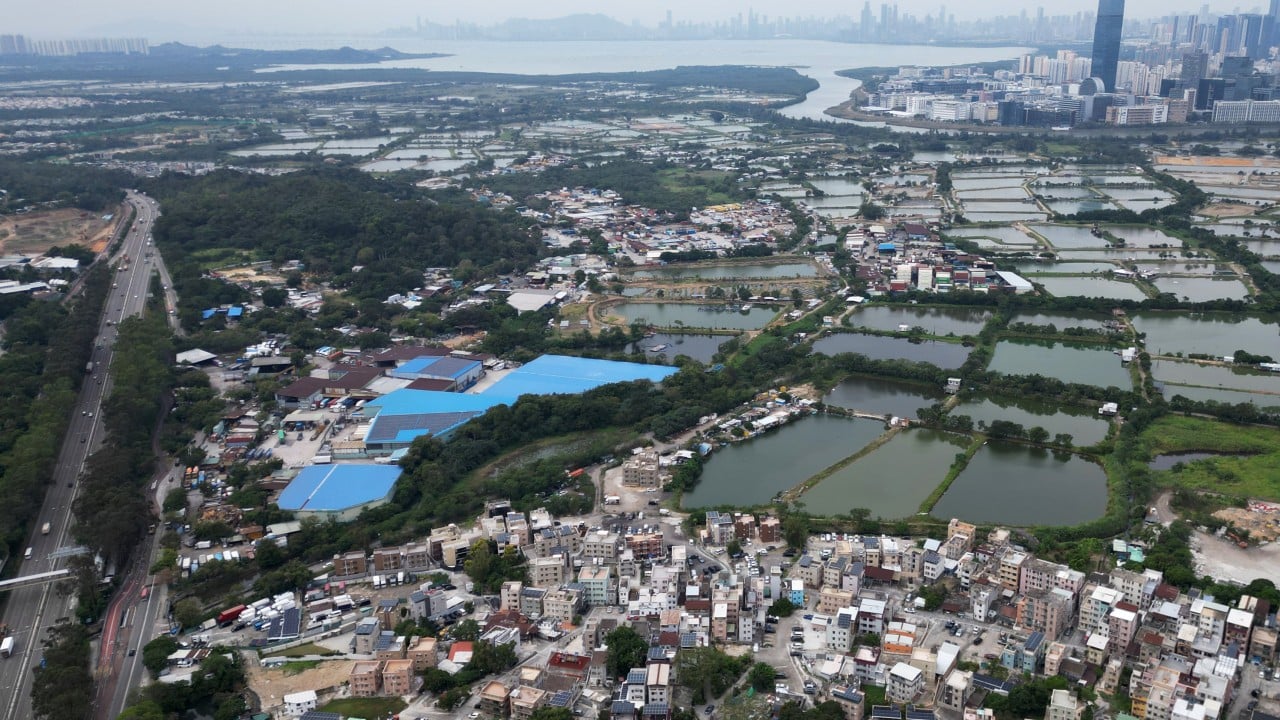
Hong Kong’s Development Bureau unveiled six subsidiary laws on March 15, 2026, to fast-track the Northern Metropolis megaproject, slashing town planning approval times from nine months to two in non-conservation zones. Experts and officials insist the reforms will not erode the authority of the Town Planning Board, though the reduction of review rounds from two to one has sparked caution among public engagement advocates. The $30 billion project aims to rezone 30,000 hectares near the Chinese border into an economic and housing corridor, with Chief Executive John Lee Ka-chiu granted explicit power to adjust boundaries.
The Northern Metropolis is a flagship of Hong Kong’s post-pandemic recovery, designed to absorb 650,000 residents by 2030 while cementing Greater Bay Area integration. Its urgency reflects twin crises: a housing backlog of 500,000 units and stagnating GDP growth. Yet the accelerated approval process risks replicating the opacity that plagued Shenzhen’s 1980s “instant city” model, where rapid development outpaced governance.
Legislator Andrew Lam Siu-lo, a town planner, framed the laws as granting “flexibility,” arguing that public consultation remains intact despite streamlined procedures. Lawmaker Jeff Yiu Ming dismissed concerns as “shackles” to progress, while Ryan Ip Man-ki of the Our Hong Kong Foundation stressed the need for concrete metrics—both economic (e.g., housing completions) and social (e.g., displacement statistics). The government, meanwhile, acknowledges a tension between “public engagement and development speed,” a phrase underscoring the core dilemma: Can efficiency coexist with democratic oversight in a system where 90% of land use is government-controlled?
What is absent from the coverage is the perspective of Northern Metropolis residents, particularly in areas like Yuen Long, where rezoning has already displaced low-income communities. Reports of “ghost villages” bulldozed for data centers hint at a pattern where economic incentives outweigh environmental or cultural considerations. The absence of a public database tracking land conversion costs and benefits leaves a critical gap in accountability.
The government will next face pressure to publish quarterly KPIs by Q2 2026, with delays or soft targets raising red flags for investors. By 2027, the project’s success will hinge on whether it creates jobs or simply subsidizes developers. If public opposition mirrors the 2021 anti-extradition protests, the administration may revert to emergency clauses to bypass the board altogether.