
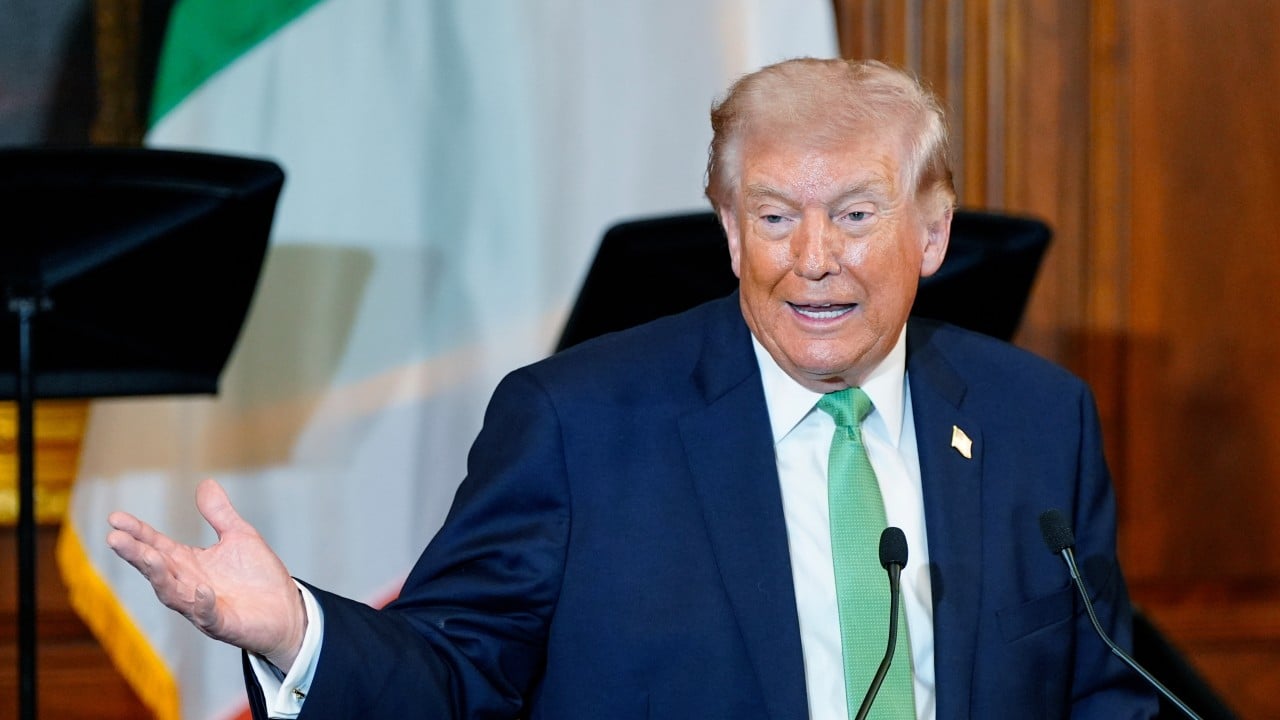
U.S. President Donald Trump confirmed on March 17, 2026, that his planned state visit to Beijing—scheduled for March 31—would be postponed by “five or six weeks” due to the U.S.-Israel war against Iran. The Strait of Hormuz, a critical chokepoint for global oil trade, remains effectively closed after 19 days of Iranian strikes, with Trump publicly demanding China and NATO allies secure the waterway, while facing resistance everywhere.
The delay underscores the tension between U.S. military dominance and its geopolitical fragility. For decades, Washington has managed the Strait unilaterally, but the war’s toll has exposed the limits of this role. China, now Trump’s reluctant interlocutor, imports 40-50% of its oil through Hormuz (contrary to Trump’s inflated 91% claim in the *Guardian*), yet Beijing has neither deployed ships nor acknowledged the delay is tied to the strait. This dissonance reflects China’s careful balancing act: maintaining cooperation with the U.S. on trade—after a truce signed in October—while avoiding entanglement in a war that threatens its energy interests.
Sources diverge on who bears the blame. *Al Jazeera* and *The Guardian* emphasize Trump’s pivot to China as a last resort, while *Breitbart* highlights the Chinese Foreign Ministry’s flat denial that the delay relates to Hormuz security, dismissing U.S. war logic as “false.” The State Department, meanwhile, remains silent. This cross-sourcing reveals a diplomatic stalemate: the U.S. wants Chinese boots on the ground but cannot afford to alienate its primary trade partner.
Analyzing the move, Trump’s calculus appears self-antagonistic. By weaponizing the Hormuz closure to justify his absence in Beijing, he inadvertently frames China as a necessary partner rather than an adversary. The war, which his administration initially predicted would “enhance his leverage,” has instead boxed Trump into a dependency on Xi—a dynamic dissected by International Crisis Group’s Ali Wyne, who noted the war has “boomeranged” U.S. strategy.
Coverage gaps abound. None of the sources discuss how China’s own energy security is faring, or how non-state actors—e.g., tankers rerouting or insurers adjusting policies—are adapting to the crisis. The Iranian perspective is absent entirely: neither the primary article nor its related coverage quotes Tehran, despite its ownership of 80% of the territory in question.
Looking ahead, Trump must watch three triggers: the U.S. Treasury’s June 2026 deadline to extend a 2023 China trade truce, the April 2026 expiration of the 1981 Persian Gulf Mine Detection Pact (which expired without renewal), and the 45-day window to pressure NATO before European allies solidify a separate energy security pact with Beijing. The delay also risks prolonging the war—a recent *SCMP* report notes U.S. allies’ refusal to assist has already forced the Pentagon to divert 12% of active-duty troops to mine-clearing.