
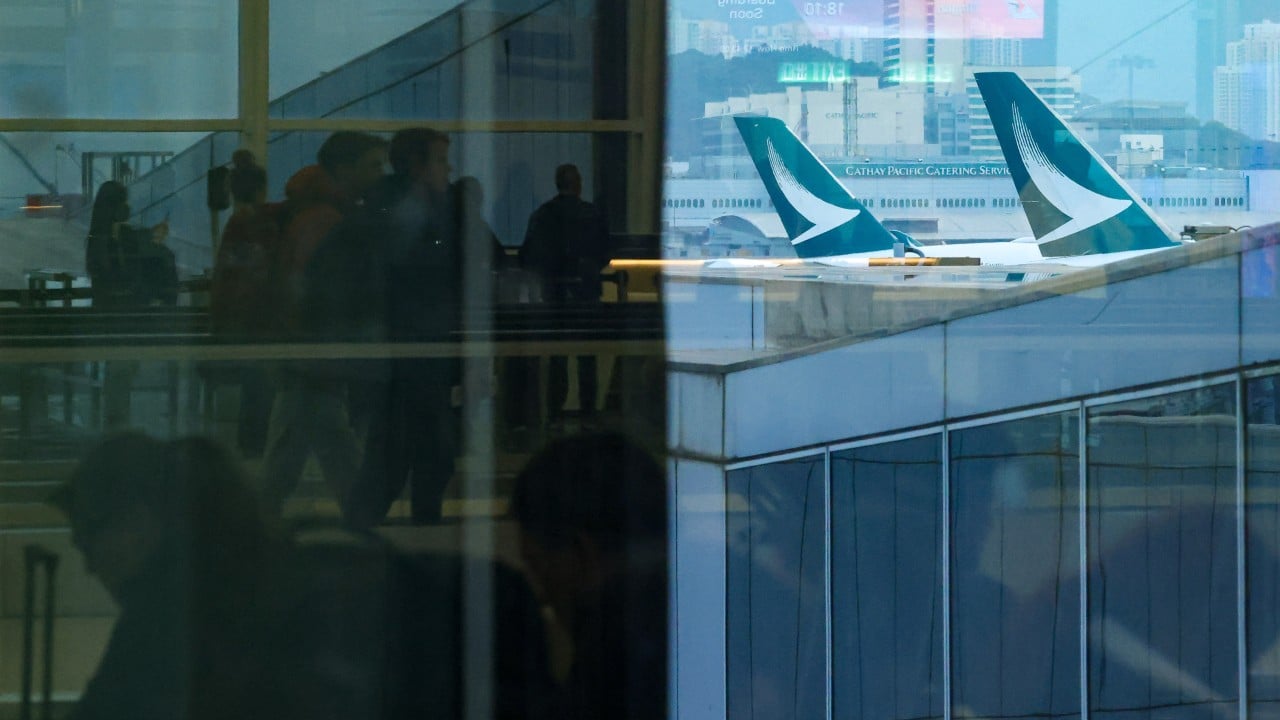
A Hong Kong flag carrier’s decision to keep its doors shut to the Middle East until April 30, 2026, is not just a corporate inconvenience. It is a mirror held up to a region unraveling under the weight of unchecked war. Cathay Pacific’s repeated flight cancellations—from February 28, initially triggered by a U.S.-Israeli strike on Iran, now extended to include Dubai and Riyadh—reflect a ground truth: this war is no longer constrained by borders or logic. It is a freefall.
The broader context is grim. Bellingcat’s forensic catalog of deployed weapons—U.S. Tomahawks, Israeli RAMPAGE missiles, Iranian Shaheds—shows a global arms bazaar in action. These are not abstract numbers on a battlefield but tools of devastation aimed at civilians and infrastructure alike. The U.S. Defense Department’s proud slideshows of munitions prepared for combat contradict Iran’s retaliatory drone strikes on Gulf cities, including Dubai and Bahrain. The conflict is now a mutual suicide pact between superpowers, with no off-ramp in sight.
Cross-source synthesis sharpens the tragedy. South China Morning Post frames Cathay’s suspension as a response to safety and stability, while the United Nations warns this war could push 45 million into acute hunger—the worst humanitarian collapse since COVID. Invesco, the asset manager, cautions investors to watch for inflationary shocks from oil market volatility. These disparate voices—corporate, humanitarian, financial—converge on one inescapable truth: the region is a liability multiplier. Even Ukrainian soldiers are now deployed to Gulf states, as President Zelensky revealed 201 personnel assisting with drone defenses, further entangling the world in the Middle East’s agony.
The deeper analysis cuts against the “business-as-usual” narrative. Cathay’s extended suspension isn’t just about rerouting passengers. It signals a collapse of the air travel and trade networks that underpin global commerce. The company is gambling that by pausing flights, it can avoid losing crewmen, aircraft, or credibility in a region where even Dubai’s Palm Jumeirah—a symbol of Arab capitalist ambition—was struck by Iranian drones. But this risk mitigation comes at the cost of severing livelihoods for countless regional laborers and Hong Kong expatriates. The airline’s calculus: better to lose revenue than to lose people in a war where all sides are losing.
What’s conspicuously missing from this coverage is the story of individuals. The scrap of a Ukrainian soldier in Bahrain, or a Saudi IT specialist stranded in Hong Kong, or the Dubai hotelier whose bookings have vanished. The conflict’s human toll isn’t just in casualties—it’s in the eroded futures of those caught between geopolitical machinery.
Looking ahead, watch for three triggers: April 30’s renewal decision, OPEC+ meetings on oil output adjustments, and UN Security Council reactions to humanitarian access blockades. If Cathay extends its ban past May, it will be the airlines’ canary-in-a-mine for regional peace. If the war drags on, global oil markets will see more volatility, and the UN’s 45-million-hunger warning will become a public health emergency.