
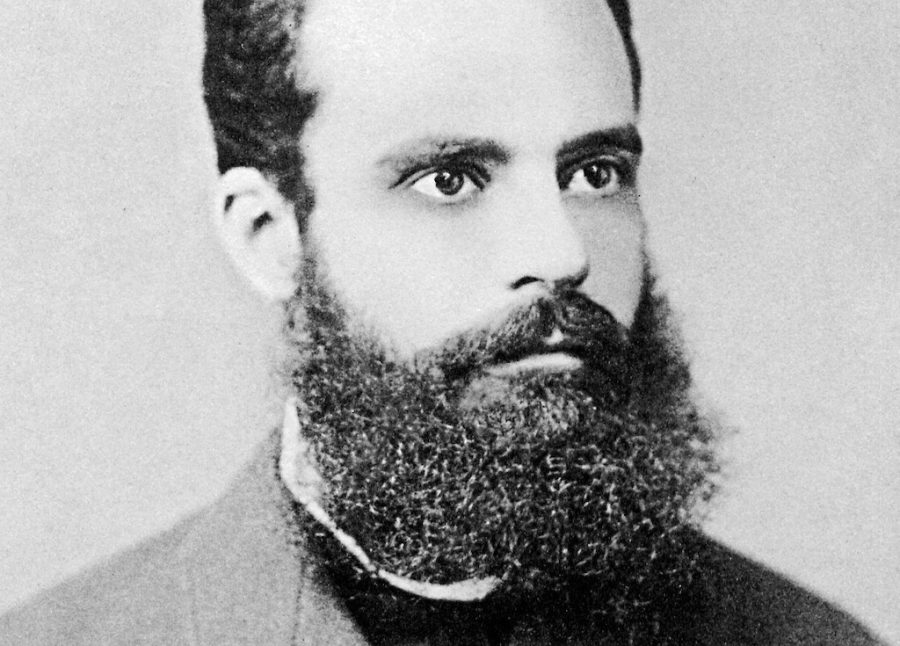
Vilfredo Pareto’s 1916 prediction that all aristocracies eventually collapse under their own decadence finds a chillingly apt case study in the United States of 2026. The Jacobin article dissects Pareto’s work, revealing how his “Law of Distribution” and analysis of elite dysfunction resonate with today’s fractured political landscape. Pareto, a statistician and engineer who fled Genoa to become an academic visionary, argued that governance inevitably devolves when ruling classes prioritize self-interest over public good. In the U.S., where both parties trade blame while infrastructure crumbles and inequality widens, Pareto’s framework seems not only descriptive but prescriptive: elites who cannot adapt to systemic demands deserve to be replaced.
Born in 1848 to a marquis turned revolutionary, Pareto spent a lifetime blending hard sciences with social theory. His 2,000-page *Mind and Society* laid groundwork for modern power elite theory, positing that 20% of any population would always control 80% of wealth. Yet his most radical insight was not the 80/20 rule, but a psychological one: elites lose legitimacy when they become “depraved,” prioritizing tribalism and self-preservation over innovation. Today’s U.S. ruling class, split between corporate-aligned senators and bureaucratic technocrats, mirrors Pareto’s “sentiments” model, where instinctual competition trumps structural reform.
The Jacobin piece highlights Pareto’s “instinct for combinations” (innovation) versus the “instinct for persistence” (entrenchment). U.S. policymakers, stung by partisan gridlock, increasingly exhibit the latter. Consider the 2026 federal budget, repeatedly stalled by infighting over trivial pet projects while climate funding languishes—Pareto would call this “persistent aggregation without adaptive combination.” The acid attack in Ahilyanagar (see Related #0) and Brown University’s Jewish school outreach (Related #1) diverge from this axis, but both reflect Pareto’s point: social order requires a governing class capable of managing “residues” (behavioral patterns). When elites fail to innovate, chaos follows.
Pareto’s skepticism of Marxism—arguing redistribution cannot overcome gravity-like economic laws—now faces its own critique. Climate disasters and AI-driven displacement demand not just growth but systemic recombination, something today’s elites resist. The Jacobin editorial sidesteps this tension, but the absence of modern data (e.g., post-2020 economic trends) leaves Pareto’s determinism unchallenged. Is elite decline inevitable, or can democracy’s “persistence of aggregates” be rewritten?
The forward trajectory hinges on 2028 midterm reforms. If congressional tech committees fail to pass AI regulation or clean energy mandates by Q3, Pareto’s thesis will harden into orthodoxy. Conversely, bold legislative “combinations” could fracture the U.S. ruling class’s stagnation. Yet historical precedent—Rome, the French ancien régime—shows that decadence is rarely reversed until collapse is imminent.