
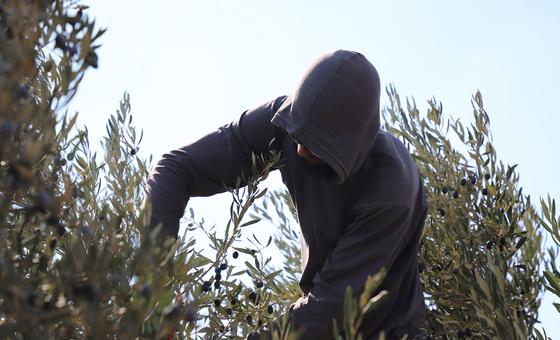
Israeli forces bombed Gaza over the weekend, killing at least six Palestinians—including children—despite the one‑year cease‑fire that was supposed to hold. At the same time, in the occupied West Bank, masked settlers stormed the olive groves of Abu Falah, beating and maiming Washington Post photojournalist Heidi Levine, destroying more than 2,500 trees and injuring over 120 farmers. UN experts recorded more than 200 attacks on Palestinian cultivators since September 1, eclipsing the total for the entire 2025 harvest season.
The violence is not random; it follows a deliberate playbook that turns a traditional harvest into a territorial showcase. Since the olive season opened on September 27, Israeli settlers have launched at least 170 assaults, according to the human‑rights group Yesh Din, each aimed at “demonstrating ownership” of the land. By targeting the trees that anchor Palestinian livelihoods, the attacks erode any hope of a post‑conflict economic recovery and embed a new normal of intimidation.
UN News stresses the sheer scale of the attacks, while Middle East Eye narrows its lens to the four Palestinian deaths in Gaza on Tuesday, underscoring the parallel surge of civilian casualties. Democracy Now! foregrounds the assault on Levine, providing graphic detail and quoting the journalist’s own condemnation of “Jewish terrorists.” Al Jazeera blends both threads, adding the EU’s demand for accountability and the Israeli police’s half‑hearted “Operation Olive Leaf,” which has so far netted only ten arrests. The variance in focus—human‑rights metrics versus headline casualties—reveals each outlet’s editorial tilt but converges on a single fact: impunity is deepening.
The calculus favours the Israeli right‑wing ahead of the October 27 election. Prime Minister Netanyahu’s office has offered vague “investigations” while simultaneously framing settlers as “law‑abiding residents.” Such equivocation fuels the narrative that settler aggression is a legitimate security measure, bolstering parties like Ben‑Gvir’s Jewish Power. The payoff is political capital, not humanitarian relief, and the cost is borne by Palestinian families who lose generations‑old orchards and by a global community watching a breach of international law.
Beyond the immediate bloodshed, the humanitarian fallout spirals. The World Food Programme has slashed aid to Gaza by a third, leaving half a million families without winter food. Prices for basic staples have more than doubled, and the UN reports a rise in malnutrition deaths. Markets react to such instability by rotating into safe‑haven assets; risk‑off sentiment lifts gold and “digital gold” alike, while speculative DeFi flows retreat.
What the coverage omits are the Israeli government’s internal deliberations and the voices of the Palestinian farmers whose families have tended those trees for centuries. We lack precise data on the economic loss per hectare, the psychological toll on children who grow up amid gunfire, and any credible timeline for a UN‑mandated investigation. Without these, accountability remains a promise, not a policy.
The next week will test whether rhetoric translates into action. UN experts will present a formal report to the Security Council on October 23, Israeli courts are expected to hear the first of the ten detainees’ cases, and the looming election will force parties to clarify their stance on settler violence. International pressure may rise if the EU issues sanctions before the vote, but history shows that diplomatic rebukes rarely curtail on‑the‑ground aggression without sustained enforcement.