
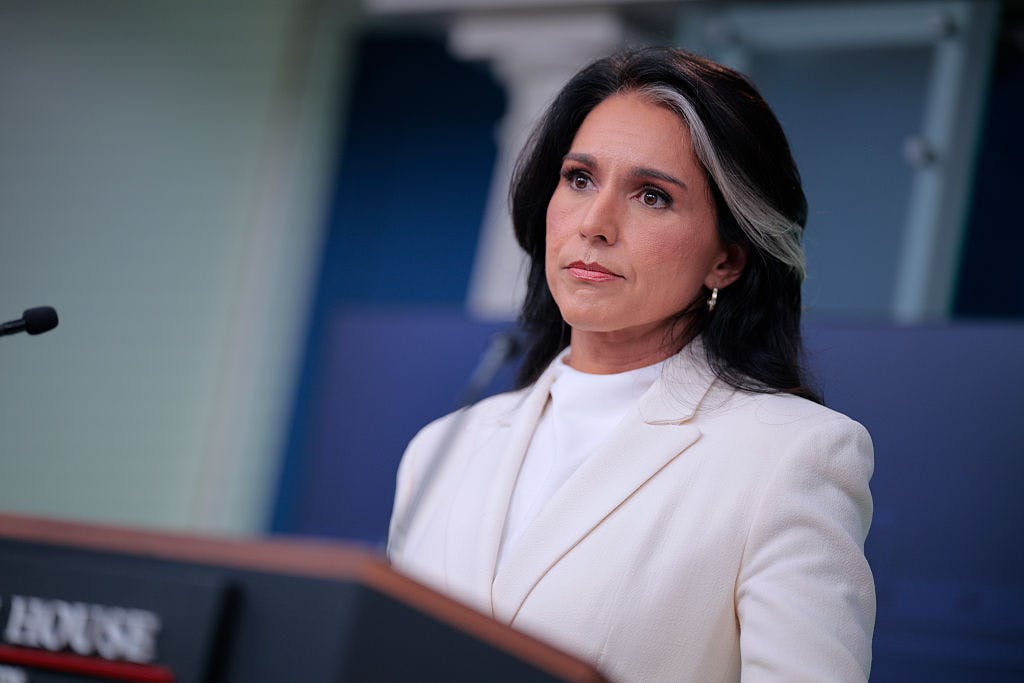
Director of National Intelligence Tulsi Gabbard has publicly backed President Donald Trump’s decision to escalate a war with Iran, framing it as a commander-in-chief responsibility to act on intelligence assessments. Simultaneously, Joe Kent, the National Counterterrorism Center director, resigned in protest, accusing Israel and the U.S. media of manipulating Trump into war. The split between these two figures—Gabbard, a former presidential candidate with progressive credentials, and Kent, a hawkish Trump loyalist—underscores how the war has exposed ideological fault lines within the administration.
Gabbard’s defense hinges on the constitutional premise that the president alone assesses threats, a stance that absolves top officials of accountability. This contrasts sharply with Kent’s resignation letter, which blames Israeli lobbying and “misinformation campaigns” for steering Trump. While Gabbard reiterates the administration’s narrative, Kent’s exit—a rare act of dissent from within the MAGA ecosystem—argues that interventionist foreign policy is eroding American credibility. Mother Jones, reporting Kent’s personal history as a 12-deployments veteran who lost his wife to an ISIS attack, frames the resignation as both political and deeply moral.
The sources agree that Israel’s influence looms large. The New York Times quotes Israeli Prime Minister Benjamin Netanyahu pressuring Trump to commit to war, while Kent’s letter and Trump’s own comments suggest the U.S. is seen as complicit in Israeli provocations. Vox and The Canary, however, emphasize differing angles: the former connects the war to Russia’s geopolitical gains, while the latter mocks Trump’s “little unfair” defense of bombing a sovereign nation. Free Beacon and France 24 note Trump’s belligerent posturing against Iran’s oil infrastructure and NATO’s reluctance to aid, revealing a president doubling down despite isolation.
Critically, the coverage misses independent assessments of Iran’s actual threat level. Neither Gabbard nor Kent provide public evidence justifying or discrediting Trump’s claim of “imminent threat.” Similarly, the role of the U.S. military-industrial complex, or the economic interests driving war contracts, remains unexplored. This gap allows the administration to claim both “security necessity” and “Israel’s manipulation” without scrutiny.
Historically, this conflict mirrors the Iraq War’s origins: a president swayed by allies, intelligence claims later debunked, and a public divided between hawkish interventionists and isolationists. As Kent’s resignation and Gabbard’s loyalty solidify Trump’s base, the parallel with post-9/11 political polarization grows sharper.
Stakeholders include Trump’s political allies (bipartisan hawks), disillusioned MAGA loyalists (Kent), Iran, Israeli leaders, and U.S. allies who reject NATO’s refusal to assist. The unrepresented voices—Iranian civilians, U.S. veterans, and international critics—anchor the moral argument against escalation.