
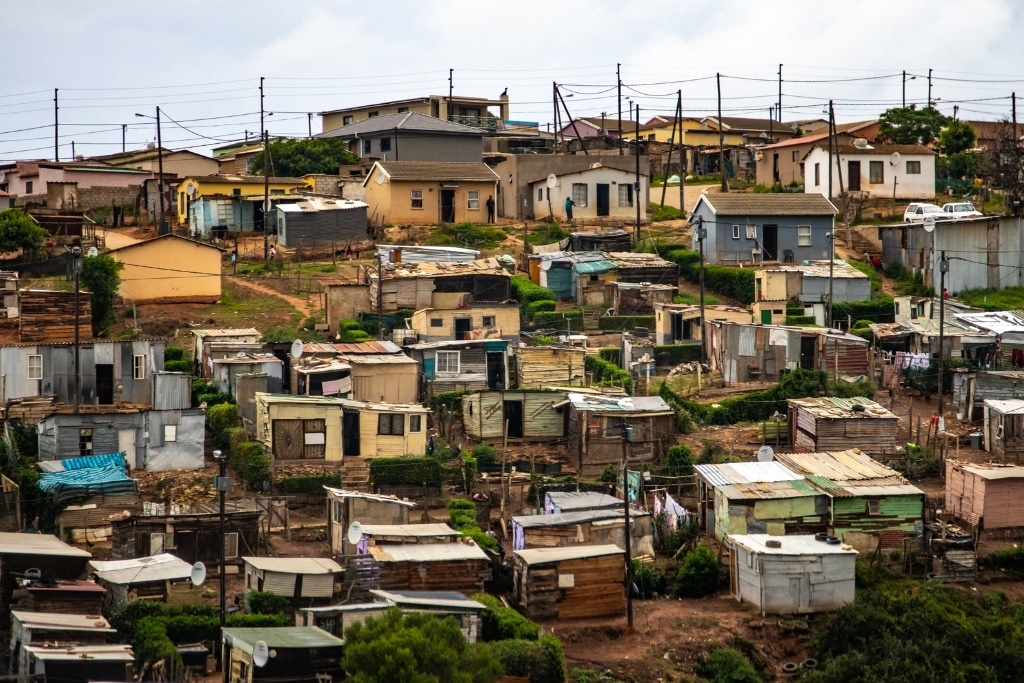
Urban resilience in the Asia-Pacific hinges on a paradox: inadequate housing, long treated as a byproduct of development, is in fact its linchpin. Earth.org’s analysis reveals that 700 million urban residents—33% of the region’s urban population—live in informal settlements, where weak governance and unplanned sprawl amplify risks from floods, landslides, and heat. These conditions, worsened by climate change, create a “resilience deficit” that threatens SDG 11’s 2030 targets. Yet the report underscores a counterintuitive truth: upgrading these settlements could yield GDP gains of up to 10% per capita, prevent 80,000 deaths annually, and avert 43 million gender-based violence incidents in a decade. The data forces a reckoning—resilient housing is not a marginal policy fix but a macroeconomic and human imperative.
The region’s failure to meet climate-readiness goals stems from treating housing as reactive rather than strategic. Earth.org cites a growing disconnect between policy and practice: while forums like the Asia-Pacific Forum on Sustainable Development increasingly champion “climate-resilient housing,” implementation remains fragmented. The private sector, for instance, has yet to fully shift from speculative real estate to scaled, affordable upgrades using low-carbon materials. Similarly, governments cling to pilot projects rather than systemic reforms, leaving informal residents—despite occupying a third of urban populations—without secure tenure or infrastructure.
The 2026 Earth.org-UN-ESCAP analysis exposes this disconnect through stark metrics: the Asia-Pacific’s 88% miss rate on SDG progress tracks directly ties to neglecting housing as a foundational input. Without resolving land-use governance or disaster risk finance, urban systems will continue to funnel climate risks into the poorest communities. Cross-sector collaboration is urgent. The UN estimates $27 billion is required annually for housing upgrades, yet financing remains ad hoc. Even in the U.S., where disasters cost $1 trillion since 2000, lessons from Asia’s informal settlements—where community-led solutions like participatory tenure systems exist—could reframe resilience as a social contract, not a technical challenge.
Coverage gaps persist. Reporting lacks granular data on how housing upgrades interact with air pollution or subsidence, and no stakeholder better represents informal residents than NGOs like Habitat for Humanity, whose voice is underrepresented in climate policy. Meanwhile, the role of urban elites in resisting land reform to protect real estate interests remains unexamined.
By 2030, the trajectory of SDG 11 will hinge on three triggers: the 2027 Asia-Pacific Forum outcomes, a 2026 World Bank assessment of climate-resilient housing bonds, and local-level implementation metrics from Manila, Mumbai, and Jakarta. If progress stalls, the region risks a 2007-levels-of-inequality crisis replayed in a climate-hazard context.