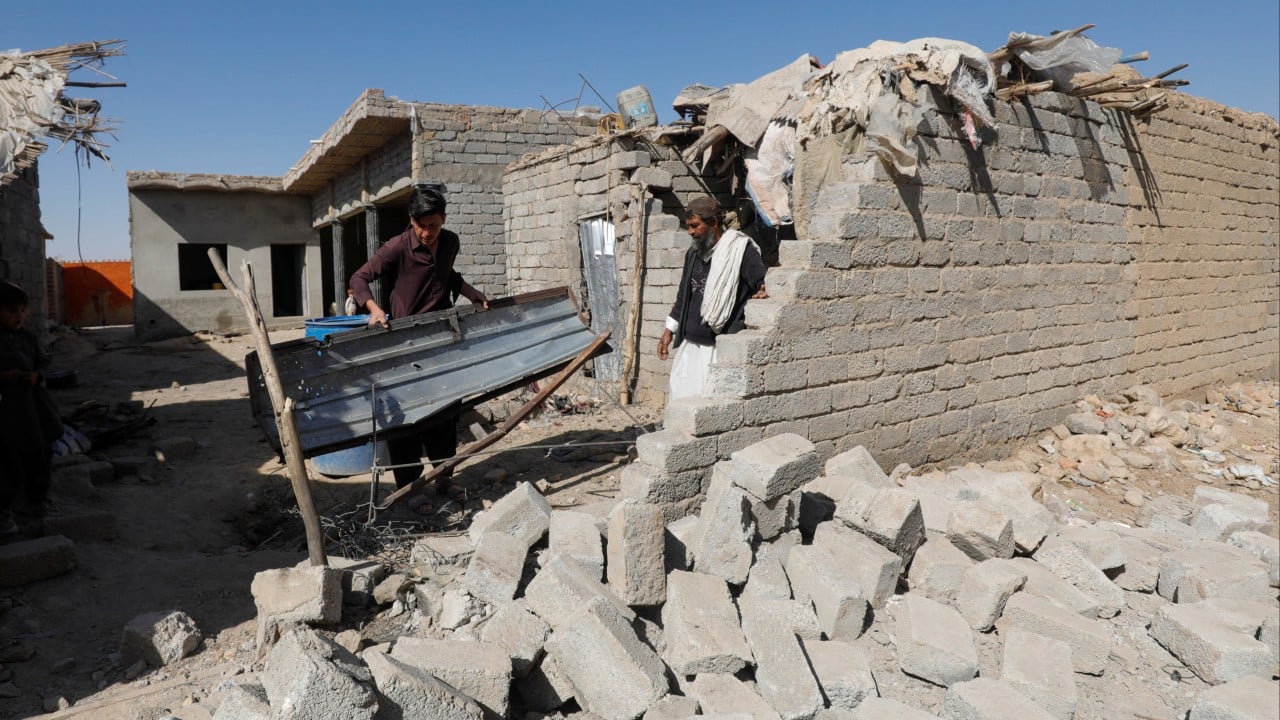
On Saturday, Pakistan's President Asif Ali Zardari issued a stark warning to the Afghan Taliban, stating that their drone attacks on Pakistani civilians had "crossed a red line." This escalation in the conflict between the two nations comes as the international community is increasingly concerned about regional stability. The situation is complex, with both countries trading accusations and denials of targeting civilians.
The conflict between Pakistan and the Afghan Taliban has been simmering for months, with tensions boiling over into cross-border clashes. The Afghan Taliban has accused Pakistan of conducting airstrikes in Kabul and other areas, resulting in civilian casualties. Pakistan, on the other hand, claims its operations are focused on Pakistani Taliban militants and their support networks. The international community, including China and the US, has been attempting to broker a ceasefire, but so far, these efforts have been unsuccessful.
A closer examination of the sources reveals that the Associated Press and SCMP report similar details of the conflict, including the drone attacks and the accusations exchanged between Pakistan and the Afghan Taliban. However, the DW News report provides additional information on the Pakistani military's interception of the drones and the subsequent debris causing injuries to civilians. The various sources also highlight the complexities of the conflict, with the Afghan Taliban denying harboring militant groups and Pakistan accusing them of doing so.
The situation is further complicated by the involvement of other regional players, including India and China. Pakistan has long accused the Afghan Taliban of allying with India, its arch-rival, while China has been attempting to broker a peaceful resolution to the conflict. The US, meanwhile, is embroiled in a separate conflict in the region, the war with Iran, which has added to the regional instability.
As the conflict continues to escalate, it is essential to consider the second-order effects of the situation. The ongoing fighting has already resulted in significant civilian casualties, with at least 75 civilians killed in Afghanistan and over 190 injured, according to the UNAMA. The humanitarian situation is likely to worsen if the conflict is not brought under control soon.
One of the critical questions that remains unanswered is what the international community can do to bring about a lasting ceasefire. China's Foreign Minister Wang Yi has urged for a peaceful resolution, but so far, these efforts have been unsuccessful. The US, as a key player in the region, must also consider its role in bringing stability to the area.
Looking ahead, the situation is likely to remain volatile, with both sides dug in and refusing to back down. The next few days will be crucial, as the international community waits to see if the Afghan Taliban will heed Pakistan's warning and cease its drone attacks. If not, the conflict may escalate further, drawing in other regional players and potentially destabilizing the entire region.
In terms of what's missing from the coverage, it would be helpful to have more information on the perspectives of ordinary Afghans and Pakistanis, who are caught in the middle of the conflict. Their stories and experiences could provide valuable insights into the human cost of the war and the challenges of finding a peaceful resolution.
Pakistan-Afghanistan conflict escalates, threatening regional stability and currency values.
Transmission
The conflict may lead to a decline in investor confidence, causing currency depreciation and fluctuations in emerging markets equities.
Time Horizons:M=MinutesH=HoursD=DaysW=WeeksMo=Months
▼Pakistani RupeePKRbearish
The escalating conflict between Pakistan and the Afghan Taliban may lead to a decline in investor confidence, causing the Pakistani Rupee to depreciate against other currencies.
MHDWMo
◆Afghan AfghaniAFNvolatile
The ongoing conflict may lead to fluctuations in the value of the Afghan Afghani, as the country's economy is heavily dependent on foreign aid and trade.
MHDWMo
▼Emerging Markets Equitiesbearish
The regional instability caused by the conflict may lead to a decline in investor confidence in emerging markets, causing equities to decline.
MHDWMo
Deeper context
What’s Missing
One of the critical gaps in the coverage is the lack of information on the perspectives of ordinary Afghans and Pakistanis, who are caught in the middle of the conflict. Their stories and experiences could provide valuable insights into the human cost of the war and the challenges of finding a peaceful resolution.
Historical Parallel
The current conflict between Pakistan and the Afghan Taliban bears some resemblance to the Soviet-Afghan War of the 1980s, where the Soviet Union's occupation of Afghanistan led to a prolonged and bloody conflict. The international community's attempts to broker a ceasefire and the involvement of regional players, including the US and China, also draw parallels with the earlier conflict.
Who’s Affected
The stakeholders affected by the conflict include the governments and people of Pakistan and Afghanistan, as well as regional players like India, China, and the US. The international community, including the UN, is also implicated, as they attempt to broker a peaceful resolution to the conflict.
Original source text
Verbatim descriptions from source feeds — unedited, as received
SCMP(center)
Pakistan’s president on Saturday warned neighbouring Afghanistan’s Taliban government that it had “crossed a red line” by launching drone attacks on civilian areas in Pakistan and said the administration in Kabul had brought “grave consequences upon itself”.
The statement by Asif Ali Zardari was the
Read full original ›Associated Press(center)
Residents inspect the site of a strike in Kabul, Afghanistan, Friday, March 13, 2026. (AP Photo/Barackatullah Popal)
2026-03-14T10:34:51Z
ISLAMABAD (AP) — Pakistan’s president on Saturday warned neighboring Afghanistan’s Taliban government that it had “ crossed a red line ” by launching drone attack
Read full original ›DW News(center)
Pakistan's military said it intercepted "rudimentary drones" from Afghanistan. It comes a day after Pakistan launched deadly strikes on Kabul as well as strikes in Kandahar Province.
Read full original ›Associated Press (Top)
Afghanistan accuses Pakistan of targeting civilians after 6 killed in airstrikes AP News
Read full original ›AFP / France 24(center)
Four people were killed and at least 15 injured by a combined Russian missile and drone attack in the Kyiv region overnight into Saturday, a local official said. Russia continues to launch almost daily attacks on Ukraine as US-brokered peace talks between the two nations have stalled amid the war in
Read full original ›UN News(center)
UN human rights chief Volker Türk said on Thursday he was appalled by the devastating impact on civilians of increasing drone attacks in Sudan, amid reports that more than 200 civilians have been killed by drones since 4 March alone, in the Kordofan region and White Nile state.
Read full original ›Agent research pack
6 sources · 6 evidence links
Swarm Claim
Afghanistan accuses Pakistan of targeting civilians after 6 killed in airstrikes.
SCMP · link
Afghan Taliban’s drone attacks on civilians ‘crossed red line’, Pakistan warnsOn Saturday, Pakistan's President Asif Ali Zardari issued a stark warning to the Afghan Taliban, stating that their drone attacks on Pakistani civilians had "crossed a red line." This escalation in the conflict between the two nations comes as the international community is increasingly concerned about regional stability. The situation is complex, with both countries trading accusations and denials of targeting civilians.
Discussion
— onchainConnect your wallet to join the discussion.
No comments yet. Be the first to share your take.